Why Wide-Angle Photos Hurt Listings
11/14/2026
The Wide-Angle Habit Every Toronto Listing Has
Scroll through any Toronto listing feed and you will see the same trick again and again: a bedroom photographed from the doorway with a lens so wide the far wall looks like it belongs to a different house. The room is not that big. Everyone knows it is not that big. And yet the photo stays, because for years the industry treated a wide-angle lens as the default setting for real estate photography — the wider, the better, the more impressive the listing.
Here is the problem: buyers have learned the trick. They walk into a showing, see a bedroom half the size of the photo that brought them there, and the first thing they feel is not excitement. It is suspicion. And suspicion is the most expensive emotion in a sale, because once a buyer doubts one photo, they start doubting all of them — the square footage, the condition, the price. A lens choice that was supposed to help the listing is quietly working against it.
Wide-angle photography is not the enemy. Used well, it is one of the most useful tools a real estate photographer owns. But there is a line between a wide lens that shows a room honestly and a wide lens that turns a room into a funhouse. This article is about where that line sits, why crossing it costs Toronto agents showings and offers, and how to get the spacious feeling buyers want without the distortion they have learned to distrust.
What Wide-Angle Distortion Actually Does to a Room
A wide-angle lens does not simply fit more of a room into the frame. It changes the geometry of what it sees. Straight lines near the edges of the frame bend outward. Objects close to the camera balloon in size while objects at the far end shrink away. A bed photographed from the foot looks twice as long as it is. A hallway stretches into a tunnel. Ceilings tilt, door frames lean, and a rectangular room can come out looking like a trapezoid.
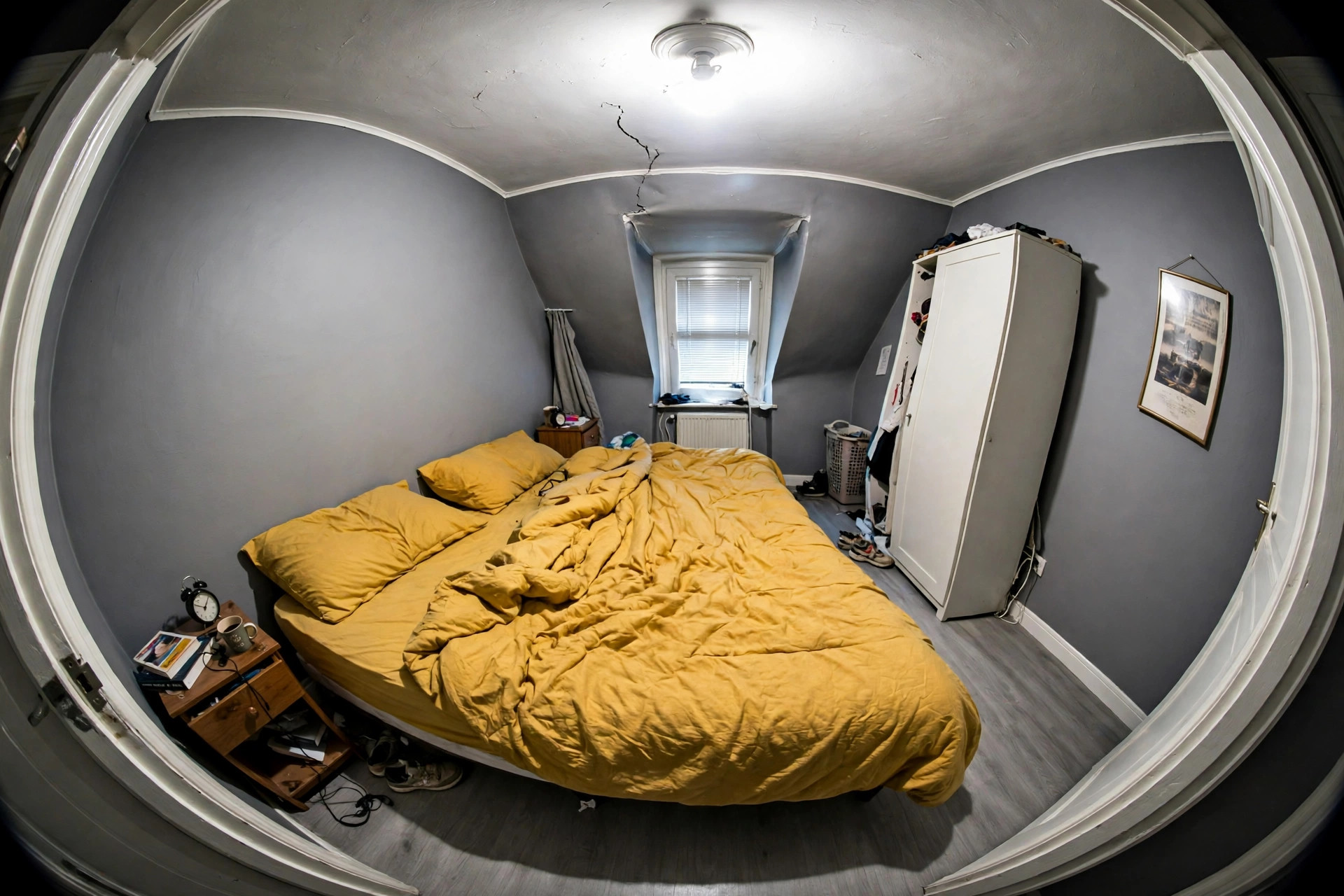
At 16mm or 14mm — focal lengths that are common in real estate work — these effects are dramatic. At 24mm or 28mm they are present but manageable. At 35mm they are barely noticeable. The difference between those numbers is the difference between a photo that flatters a room and a photo that misrepresents it.
Buyers do not need to know focal lengths to feel the difference. The human eye sees the world at roughly the equivalent of a 40 to 50mm lens. When a photo departs too far from that, the brain registers that something is off, even if the viewer cannot name what. The room looks impressive for half a second, and then it looks wrong. In a market like Toronto, where buyers routinely compare twenty or thirty listings in an evening, "wrong" is enough to make them scroll past.
Why Buyers Punish the Trick Now
Five years ago, an exaggerated wide-angle photo was a mild advantage. Buyers expected listing photos to be generous, and they mentally discounted them. That era is over, for three reasons.
First, buyers are more visually literate than ever. They spend hours on listing platforms, and they have seen thousands of rooms. They know what a twelve-by-twelve bedroom looks like from a doorway, and they can tell in a glance when a photo is lying about it.
Second, the showing is the reckoning. A buyer who books a showing because a condo looked spacious and then finds a cramped layout does not just feel disappointed — they feel misled. That feeling attaches itself to the listing agent and the seller. In a competitive Toronto market, a buyer who feels misled does not negotiate harder. They leave.
Third, the photos are the first showing. Most buyers now decide whether a home is worth their time almost entirely from the photo set, often before reading a single line of the description. A photo set that oversells the space does not win more showings. It wins showings that end in fast exits and no offers, which is worse than fewer showings with serious buyers.
The Trust Problem Is Bigger Than the Room
This is the part agents underestimate. A distorted photo does not just misrepresent one room. It changes how a buyer reads everything else in the listing.
Once a buyer spots one photo that bends the truth, they start questioning the rest: is the kitchen really that bright, or is that a flash trick? Is the backyard really that deep, or is that a low-angle lens? Is the "bright, airy" living room actually a dark unit with the exposure pushed three stops? The whole listing gets re-read through a filter of doubt, and doubt is what kills offers at the margin.
Trust is the actual product a listing sells. The photos are evidence, and evidence that looks doctored stops being evidence. The agents who win in Toronto right now are the ones whose photos a buyer can believe — because when a buyer walks in and the home matches the photos, the showing starts from confidence instead of suspicion, and confident buyers make offers.
How to Get Spacious Without Getting Distorted
The good news is that you do not need a 14mm lens to make a room feel generous. Professional real estate photographers have a whole toolkit for spaciousness that never bends a wall.
Shoot from the corner, not the doorway. A diagonal view across a room shows two walls and the floor at once, which reads as depth without needing an extreme lens. A 24mm or 28mm lens from a corner gives you nearly the whole room, with straight lines intact.
Keep the camera level and at chest height. Tilting a wide lens up or down is what makes vertical lines converge and rooms look like they are falling over. A level camera at about five feet keeps walls straight and the room honest.
Use light, not focal length. A room photographed with balanced window light and a properly exposed interior feels larger than the same room shot dark with a wider lens. Brightness reads as space; darkness reads as small, no matter how wide you go.
Stage for sightlines. A clear line from the camera to a window, or through a doorway into the next room, creates depth the honest way. Clutter in the foreground kills that depth faster than any lens choice.
Correct in post. Even a well-shot 24mm frame benefits from lens-profile correction, which straightens the slight barrel distortion at the edges. It is a thirty-second step that makes the difference between a professional photo and an amateur one.
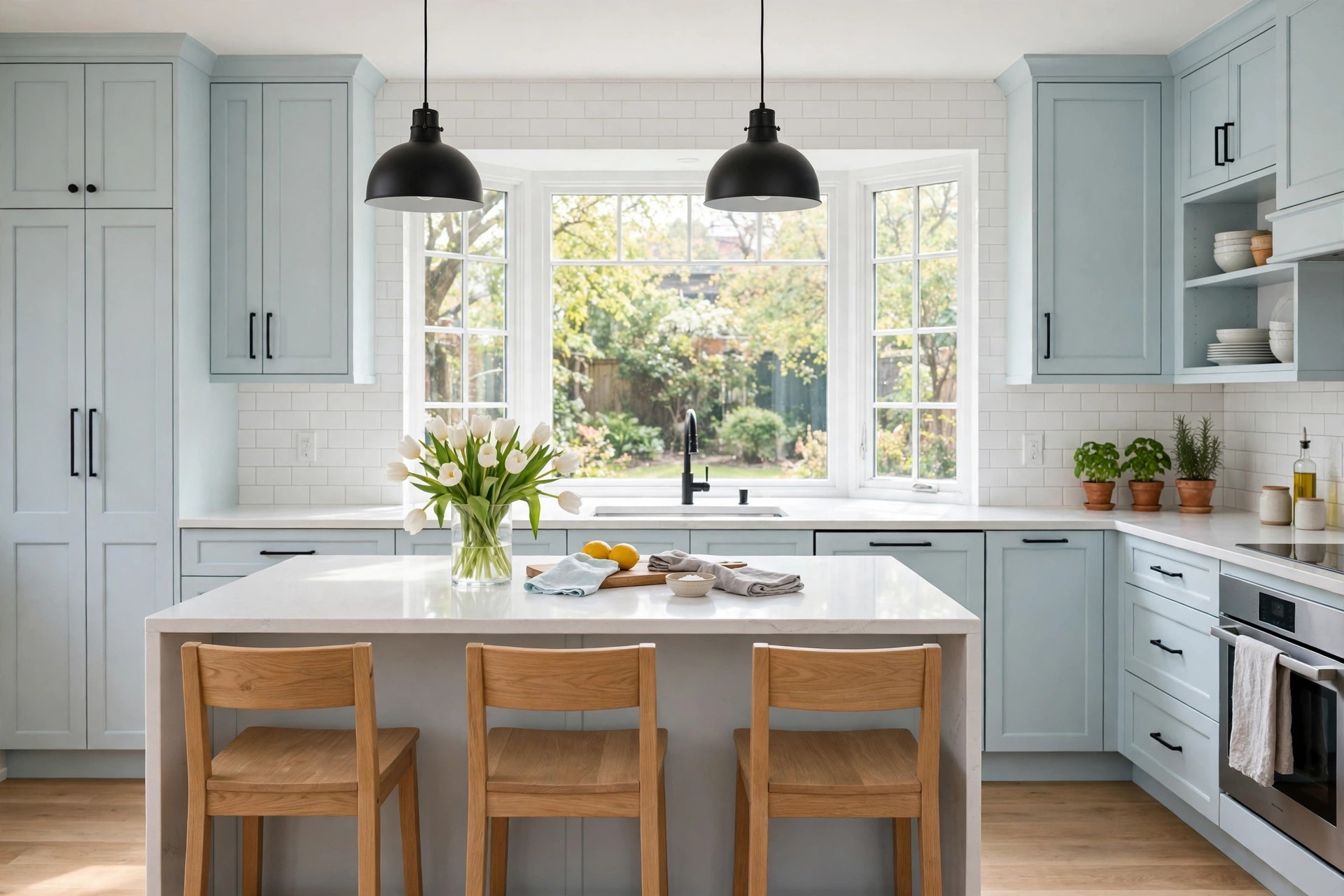
The result is a photo set where every room looks like itself, only at its best. A buyer who walks into that home feels recognition, not surprise — and recognition is the feeling that turns a showing into an offer.
What to Ask Your Photographer
If you are a Toronto agent hiring a photographer, you do not need to become a lens expert. You need three questions, asked before shoot day.
What focal length do you shoot interiors at? The answer you want is in the 24mm to 35mm range for most rooms, with wider lenses reserved for genuinely tight spaces like small bathrooms and galley kitchens — and even then, corrected in post.
Do you correct verticals and lens distortion? The answer should be yes, always, as part of the standard edit. If the answer is no, the photos will look like phone snapshots with a wide lens attached.
Can I see a full photo set from a home like mine? Not the photographer's best three portfolio shots — a full set from a comparable condo, townhouse, or detached home. A full set shows whether the photographer is consistent or whether they lean on distortion to rescue weak rooms.
A photographer who welcomes these questions is a photographer who shoots for the showing, not just for the thumbnail. That is the photographer whose listings get believed.
The Bottom Line for Toronto Agents
Toronto buyers are not fooled by wide-angle photos anymore. They have seen too many of them, and they have walked into too many rooms that did not match. Every distorted photo is a small withdrawal from the trust account a listing needs to sell — and in a market where the best homes sell on confidence, that account is everything.
The fix is not complicated, and it does not make listings look smaller. A 24mm lens from the corner, a level camera, honest light, and a proper edit will make any Toronto home look like the best version of itself — a version the buyer will recognize the moment they walk through the door. And that recognition is worth more than any fisheye trick ever was.
If your listings are not getting the showings they deserve, look at the photos first — not at the price, not at the description, at the photos. The lens may be doing more damage than you think.