Shooting Toronto Listings in Winter
11/4/2026
Why Winter Is a Photographer's Secret Season
Most Toronto agents treat December through February as a dead zone for listings. The days are short, the skies are grey, and half the buyers seem to be in Florida. But here's what experienced listing photographers know: winter is one of the best times to make a home look extraordinary on camera — if you shoot it on purpose instead of apologizing for it.
Think about the market. Inventory drops hard in winter, which means every listing gets a bigger slice of buyer attention. Fewer competing photos on MLS, more eyeballs per listing. And buyers who tour in winter are serious — nobody trudges through slush for a casual look. The photographer's job is to meet that seriousness with images that feel like refuge: warm, bright, and calm. A winter listing that glows on screen can actually outperform a summer one, because it promises exactly what the buyer wants at that moment: shelter.
The other advantage is light discipline. Summer shoots fight harsh midday sun, blown-out windows, and unpredictable storms. Winter gives you a predictable, soft, low-angled sun and long blue-hour windows. You know exactly what you're getting and when. For a photographer, that's not a limitation — it's a controlled studio with a very large ceiling.
The Exterior Problem — and How to Solve It
Let's be honest about the hard part: exteriors in winter can look bleak. Bare trees, brown grass poking through patchy snow, grey skies. Buyers form their first impression from the hero shot, so this is where winter shoots are won or lost.
The single biggest lever is the shovel. A cleanly shovelled driveway, walkway, and front steps transform a listing photo. It signals maintenance, care, and move-in readiness — all in one frame. Photographers should arrive with this expectation set: if the walk isn't cleared, the exterior shoot waits until it is. No exception. A salted, dark, wet-looking walkway photographs far better than a trampled snow path.
Timing matters more in winter than any other season. The sweet spot is the hour after sunrise, when low sun rakes across snow and turns it pale gold instead of flat white. Overcast days are your friend too — clouds are nature's softbox and they kill the harsh contrast that makes snow blow out to pure white while the house goes muddy. Avoid the dead middle of the day, when the sun sits low and flat behind the house and everything looks cold and shadowless.
And expose for the snow, not the house. Meter off the brightest patch of snow and let the house land where it lands — you can lift shadows in post, but you cannot recover detail from blown-out highlights. Bracket every exterior frame. This is non-negotiable in winter.
Shoot the Light, Not the Cold
Interiors are where winter listings win, because this is where warmth becomes a competitive weapon. The playbook is simple: every light on, every blind open, and the camera white-balanced to make the interior feel like a sanctuary from the cold outside.
Start with the windows. In winter the instinct is to close the blinds against the gloom, but a bright window showing falling snow or a frosted tree is one of the most emotionally powerful elements you can put in a listing photo. It frames the interior as the warm answer to the cold world. Clean the glass first — winter grime on windows kills this effect completely — and shoot with the interior lights doing the heavy lifting so the room doesn't go silhouette.
Layer your light sources. Overhead lights alone make rooms feel flat and institutional. Turn on every lamp, the under-cabinet strips, the fireplace if there is one. Practical lights at different heights create depth and make a room feel lived-in rather than staged. For the camera, set white balance slightly warm — around 4500 to 5000K reads as inviting without going orange. Auto white balance in mixed winter light will often push interiors toward a clinical blue that makes buyers feel cold just looking at the screen.
One more trick: shoot the rooms buyers will imagine themselves in at 7 PM. In summer that's the backyard. In winter it's the living room with the fire on, the kitchen with the pendant lights glowing, the bedroom with the bedside lamps lit. Photograph the evening version of the house, even at noon. You're selling the feeling of coming home in the dark to somewhere warm.
Warmth Sells: Staging for the Season
Winter staging for photography is about texture. The camera reads texture as warmth, and warmth is the entire emotional pitch of a winter listing. This doesn't mean a full redesign — it means targeted, photogenic layers.
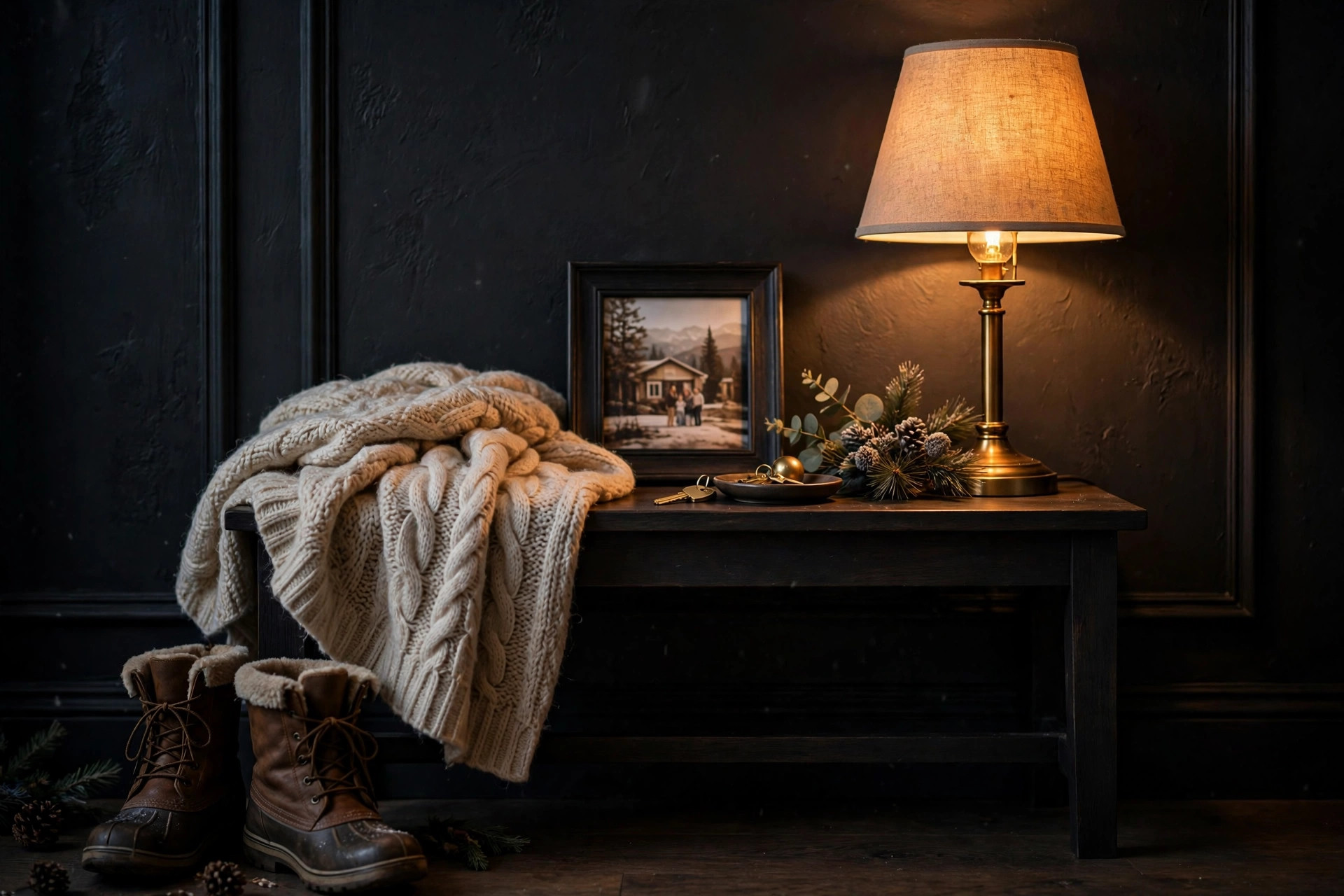
Throw blankets and cushions in heavy knits, wool, or faux fur. A chunky knit throw draped over the arm of a sofa changes the whole temperature of a photo. Area rugs over hard floors — non-negotiable in winter shoots; bare hardwood in a January photo reads as cold no matter how nice the floor is. In the kitchen, a wooden cutting board, a bowl of citrus, a kettle on the stove. In the bathroom, rolled white towels and a small eucalyptus bundle. None of this is expensive, and all of it photographs as comfort.
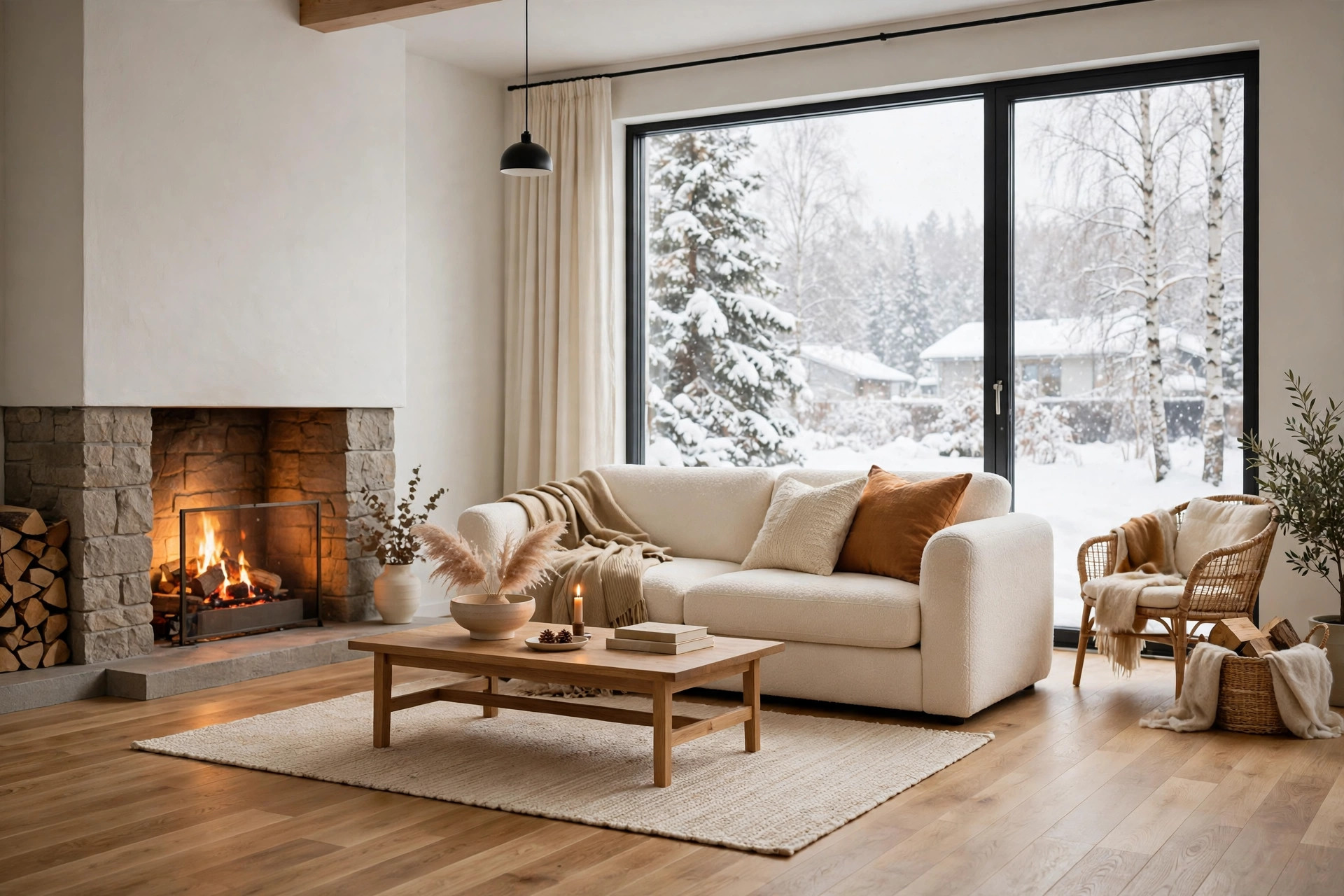
The entryway deserves special attention in winter because it's the transition shot — the first interior frame most buyers see, and the one that answers the question the snowy exterior raised. Style it deliberately: boots lined up neatly, a bench with a folded throw, a console with a lamp glowing warm against a darker wall. This single vignette tells the buyer "people live well here in February," which is exactly the story a winter listing needs to tell.
Keep holiday decor out of it. A Christmas tree dates the photos instantly and alienates every buyer who doesn't celebrate it — plus the listing may still be live in March. Winter styling, not holiday styling. Pinecones are fine; ornaments are not.
Drones Still Fly: Winter Aerials Done Right
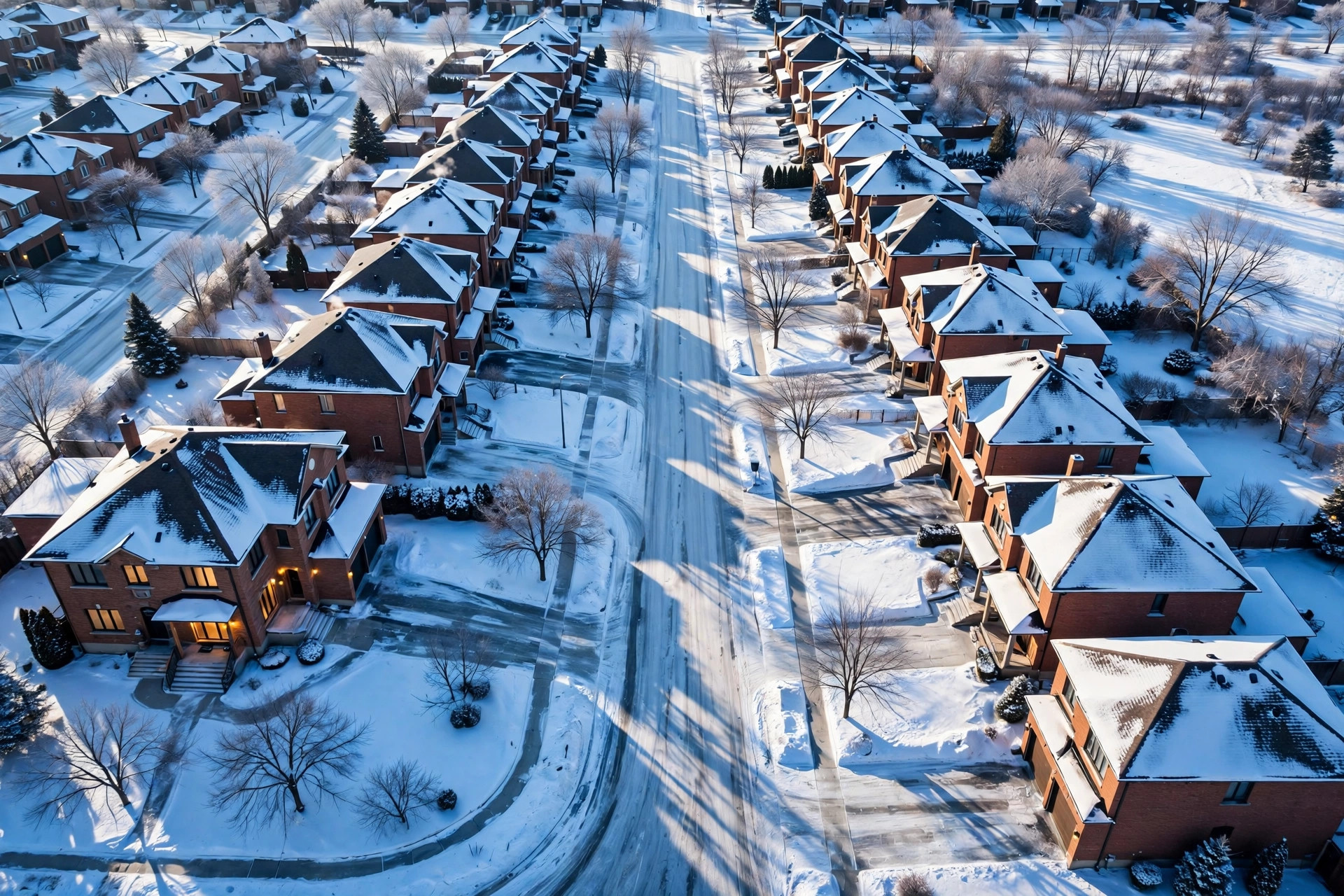
Drone photography in winter is underused and spectacular. A snow-covered street shot from above, with warm windows glowing in a row of houses, is one of the most arresting listing images you can produce in this market. Most agents never ask for it in winter, which means the listings that have it stand out immediately.
The technical notes matter. Cold kills drone batteries fast — expect roughly two-thirds of normal flight time, keep spare batteries in an inside pocket until the moment you fly, and never launch below the manufacturer's rated temperature. Condensation is the other enemy: bring the drone inside in a sealed bag so moisture doesn't form on the lens and gimbal.
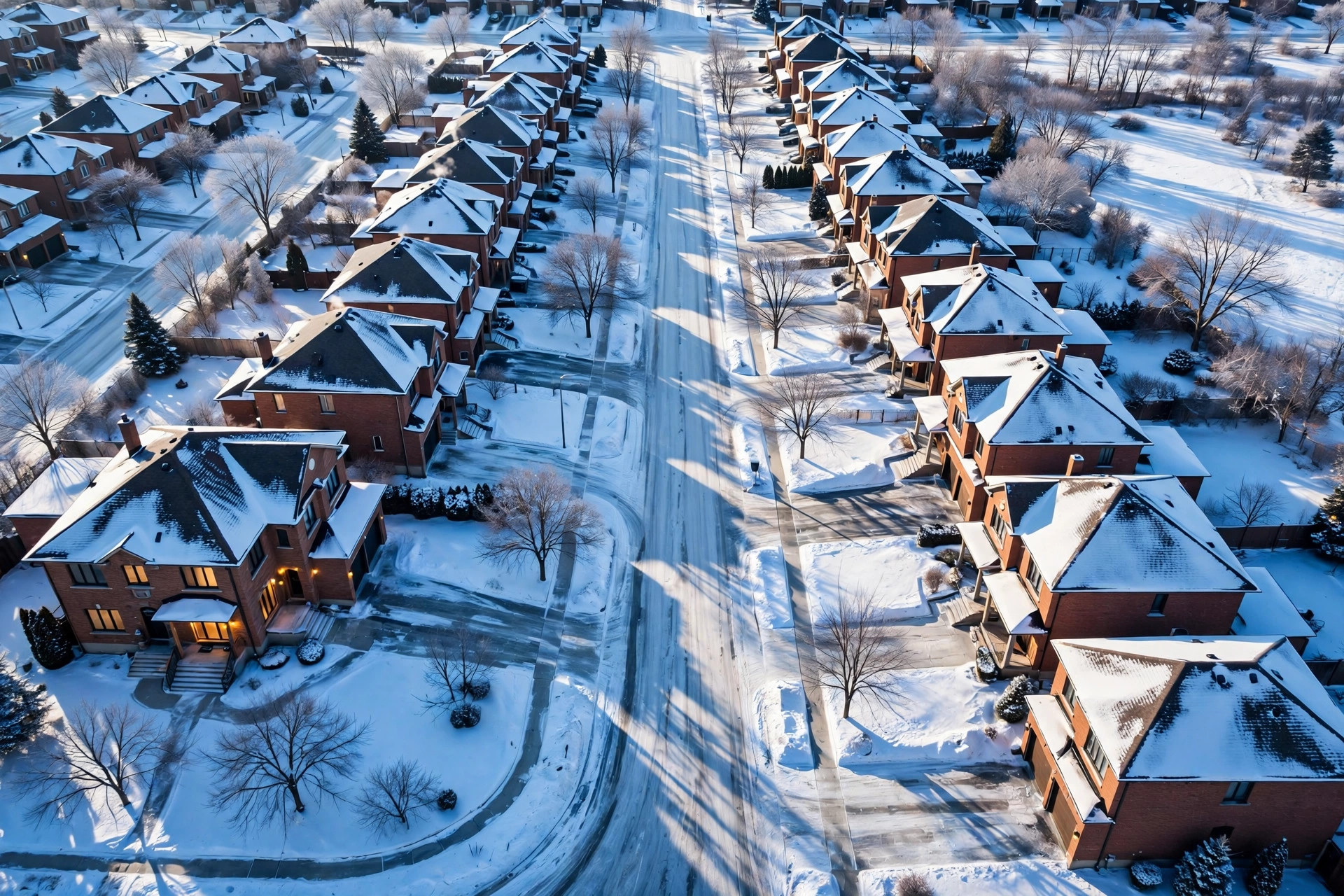
For the shot itself, altitude is everything. Too high and the neighbourhood looks abstract; too low and you lose the winter context. Somewhere between 40 and 80 feet usually frames a house with its snow-covered lot and street in a way that reads as premium. Shoot slightly into the low winter sun for long shadows that give the snow texture and dimension — flat overcast light from directly above makes everything look like a parking lot.
And check the frame for winter-specific clutter before you shoot: garbage bins at the curb, unshovelled neighbouring walks, cars half-buried in snowbanks. The aerial sees everything, including the things the ground-level shoot hid. A two-minute scan of the frame saves an unusable hero shot.
Editing Winter Shots Without Faking Spring
Post-processing is where winter shoots get ruined most often. The temptation is to push everything bright and warm until the photo looks like July — and buyers can smell it. Over-edited winter photos erode trust, because the buyer will stand in that grey February light on showing day and feel lied to.
The honest approach: correct, don't transform. Pull the whites in the snow back from clipping so they hold detail. Lift the shadows in the house facade so it doesn't go muddy. Keep the sky the colour it actually was — a pale winter blue or soft grey is fine; swapping in a fake blue sky with puffy clouds is the fastest way to make a listing look like a scam. If the day was overcast, let the photo be overcast, and let the warm interior lights be the contrast that carries the image.
White balance is the other trust point. Interiors should feel warm, but skin tones and whites need to stay believable. If the white trim looks yellow, you've gone too far. Aim for the feeling of walking into a warm house on a cold day — that's a memory every buyer has, and it's the most persuasive thing a winter listing photo can evoke.
Winter doesn't shrink your listing's potential. It just changes the assignment: less curb appeal, more refuge. Shoot the warmth, respect the cold, and the photos will do the selling that the season supposedly makes impossible.