Curb Appeal Photos That Sell Homes
11/25/2026
The First Photo Decides the Showing
Before a buyer reads a single word of your listing, they see the first photo. And in most Toronto listings, that first photo is the front of the house. In the three seconds it takes to decide whether to keep scrolling or tap in, the exterior shot does all the talking. A bright, welcoming front tells a buyer the home is cared for, the street is pleasant, and the showing will be worth their time. A dark, crooked, cluttered exterior tells them the opposite — and they never come back to find out if they were wrong.
That is why curb appeal photography matters more than most agents think. The interior photos prove the home is livable. The exterior photo proves the home is lovable. It is the one image that carries the neighbourhood, the street, the front garden, and the feeling of arriving home, all in a single frame. Get it right and the listing earns the click. Get it wrong and the best kitchen in the city never gets seen.
The good news is that a great curb appeal photo is not about owning an expensive camera or waiting for perfect weather. It is about light, angle, staging, and the discipline to fix the small things before the shutter clicks. Here is how to shoot exteriors that get buyers through the door.
Shoot the Front in the Best Light
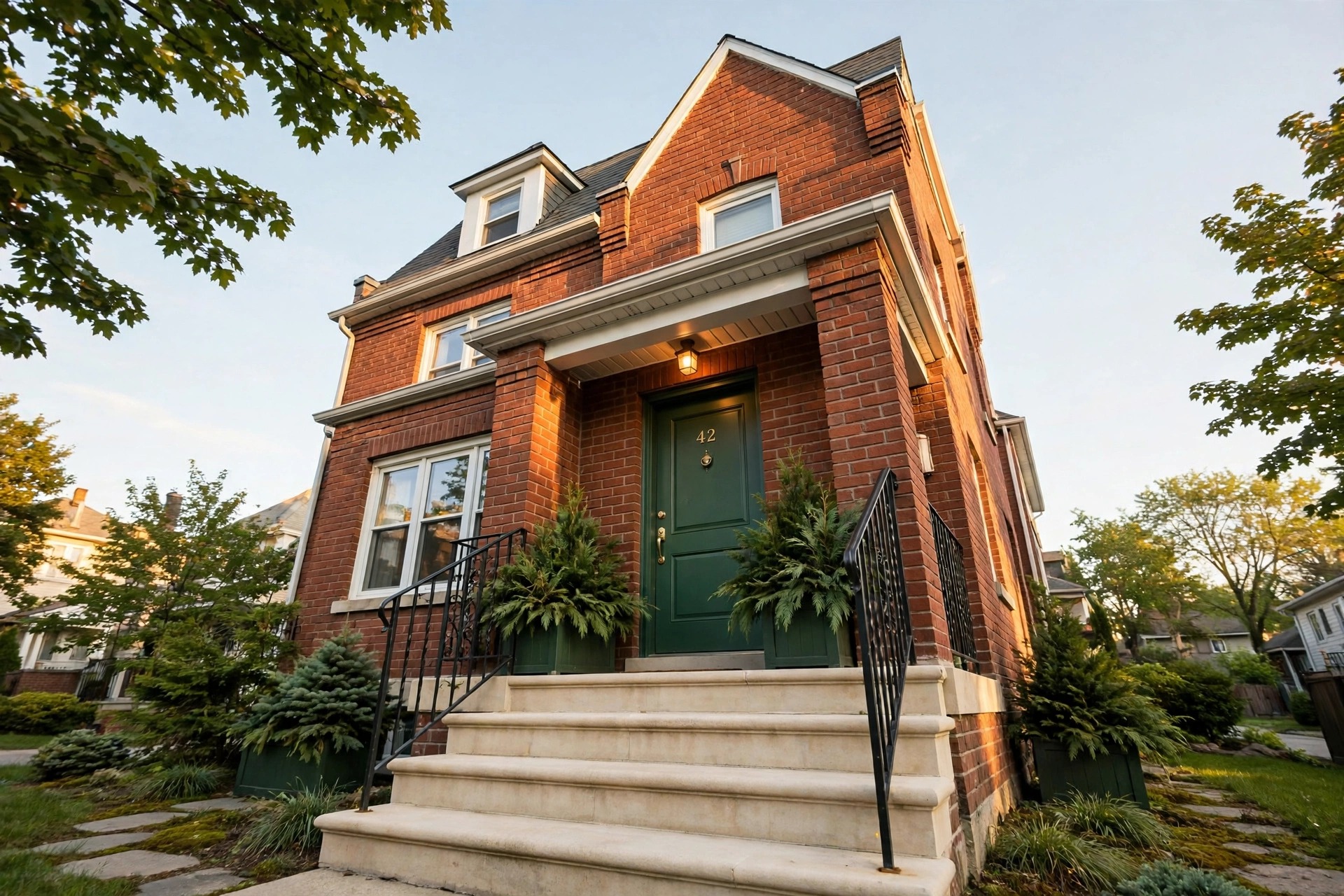
Exteriors live or die on light, and the sun is not on your side all day. The worst time to shoot a front elevation is midday, when the sun sits high and flat, washing out the brick, throwing hard shadows under the porch, and turning the windows into black holes. The best time is the golden hour — the first hour after sunrise or the last hour before sunset — when the light comes in low and warm, the brick glows, and the front door catches a soft highlight.
For most Toronto homes, morning light works best on east-facing fronts and evening light on west-facing ones. If the house faces north, mid-morning is your friend: the sun is high enough to fill the front without blasting it. If it faces south, shoot early or late and let the porch stay in gentle shade rather than harsh contrast. The rule is simple: you want the front lit, not bleached, and the sky bright, not blown out to white.
Watch the sky in the frame. A pale, empty sky makes even a beautiful home look flat. A sky with a little texture — soft clouds, a warm gradient near the horizon — gives the photo depth and makes the house feel like part of a real place. If the day is fully grey, do not cancel the shoot. Overcast light is soft and even, and it flatters brick and painted trim beautifully. Just expose for the house, not the sky, and let the photo stay honest about the season.
Frame the Whole House, Then the Details
Every curb appeal set needs two kinds of shot, and most listings only have one. The hero shot is the full front elevation, taken from across the street or the far end of the driveway, at eye level or slightly low. It should show the whole house — roofline to front steps — with a little of the street and the neighbouring homes for context. This is the photo that leads the listing, so give it room to breathe. Do not crop the roof off, do not cut the front steps, and do not let a parked car or a garbage bin claim a third of the frame.
Then move in close. The detail shots are what make a buyer feel the home rather than just see it. A front door with character. Brass house numbers that catch the light. A porch lantern, a well-kept planter, a stone step worn smooth by decades of use. These small frames tell the story the wide shot cannot: someone loved this house, and it shows.
Keep both kinds of shot honest. Stand straight, keep the verticals true so the house does not lean, and resist the ultra-wide distortion that makes a modest semi look like a mansion. A front that looks bigger in the photo than it feels in person does not create excitement — it creates disappointment at the door, and disappointed buyers do not make offers.
Stage the Porch Like a Welcome Mat
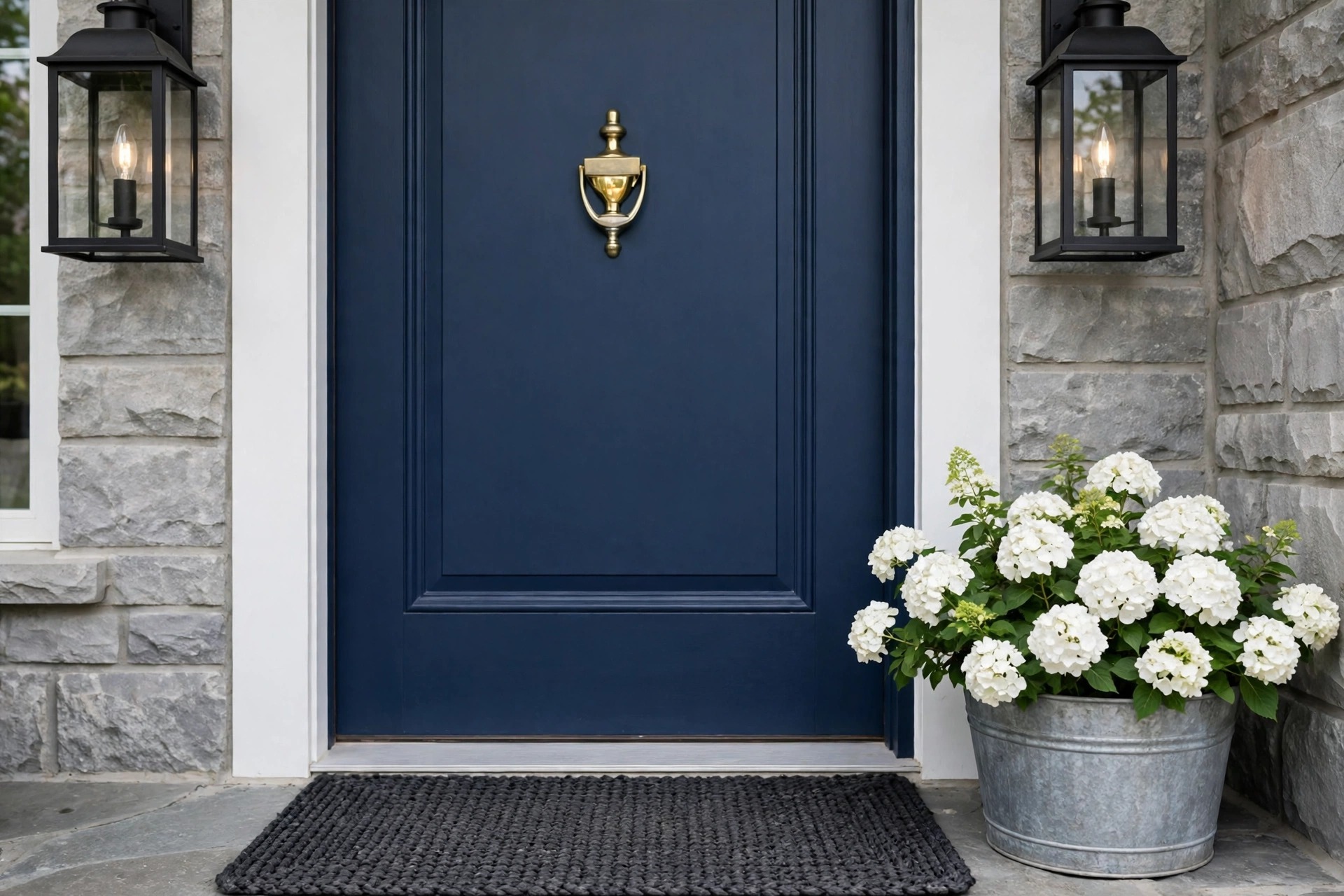
The porch is the handshake of the house, and buyers read it instantly. A porch with two healthy planters, a clean doormat, and a lantern that actually works says "welcome." A porch with a dead plant, a faded mat, and a burnt-out bulb says "nobody is home, even when somebody is." Staging a porch costs almost nothing and changes the whole photo.
Start with the door. It is the focal point of every exterior shot, so give it a reason to hold the eye. A fresh coat of paint in a confident colour — deep green, navy, plum, or classic black — turns a plain front into a photograph. Clean the hardware, polish the knocker, and make sure the house numbers are legible and straight. Small, cheap, and visible in every single shot.
Then add life. Two matching planters flanking the door frame the entrance and pull the eye toward it. Evergreens work in every season in Toronto; in spring and summer, add colour with hydrangeas or geraniums. A simple woven doormat finishes the scene. Keep it restrained — one or two elements, not a garden centre. The porch should look lived in, not decorated for a photo contest.
Finally, clear the clutter. Move the bikes, the recycling bins, the garden hose, and the kids' toys out of frame. Hide the air conditioning unit behind a planter if you can. A clean porch photographs as a bigger porch, and a bigger porch photographs as a better home.
Fix the Small Things Before the Camera Comes Out
Exterior photos are unforgiving about the small stuff, because the camera sees the whole front at once. The things nobody notices in person — a crooked blind in the front window, a cobweb on the porch light, a patch of weeds along the walkway — jump out in a photograph and stay there, in every listing a buyer scrolls through.
Run a ten-minute walk-through before the shoot. Straighten the blinds and open the curtains so the windows glow instead of glaring. Sweep the steps and the walkway. Pull the weeds from the cracks. Wipe the front door glass and the porch light covers. Close the garage door — an open garage full of boxes is the fastest way to ruin a hero shot. And check the lawn: a freshly mowed strip and a trimmed edge along the sidewalk make the whole property look sharper.
Do the same check for the street. If a neighbour's bins are out, ask if they can be moved for twenty minutes, or shoot from the angle that keeps them out of frame. If a car is parked in front of the house, move it. The street is part of the photo whether you plan it or not, so plan it.
None of this is glamorous work. But it is the difference between a photo that looks like a home for sale and a photo that looks like a home someone already loves. Buyers can tell, and they pay for the second one.
Dusk Shots: The Secret Weapon for Evening Scrollers
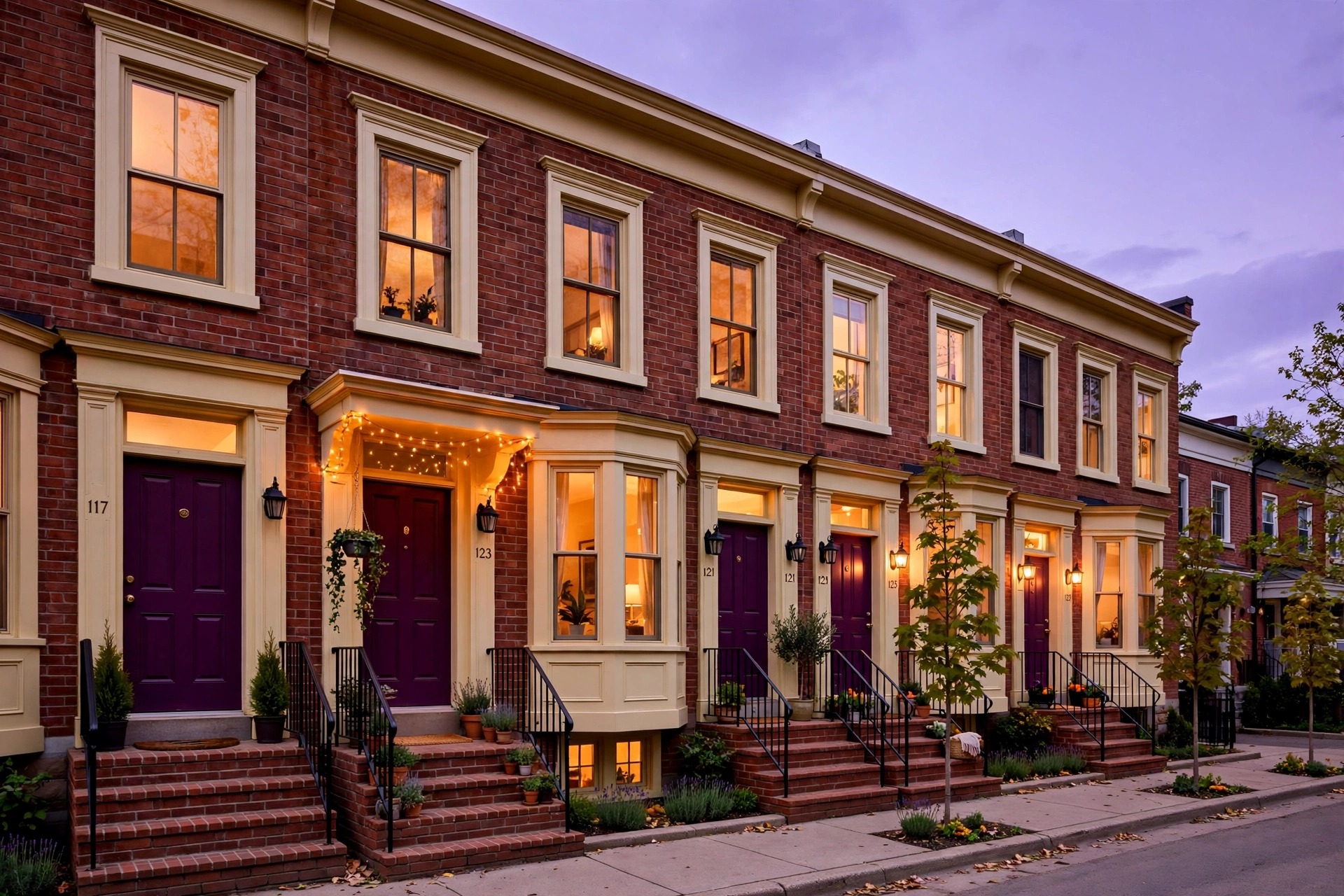
Here is the trick most Toronto listings skip entirely: shoot the front again at dusk. As the sky turns lavender and the porch lights come on, a house photographs like a place you want to come home to. The warm windows, the glowing lanterns, the string lights on a porch — they do emotional work that no daylight shot can match. And most buyers scroll listings in the evening, on the couch, imagining exactly that feeling.
Dusk shots need timing. The window is short — roughly twenty minutes when the sky still holds colour and the interior lights are already on. Turn on every light in the front rooms and the porch before the sky fades, and expose for the house so the windows glow warm instead of blowing out. A tripod helps here, because the light is low and a steady frame keeps the brick sharp.
Use the dusk shot as the second or third photo in the listing, right after the daylight hero. It gives buyers a second reason to stop scrolling, and it makes the listing stand out in a feed full of identical daylight fronts. One strong dusk photo can carry a whole listing — and it costs nothing but twenty minutes and a little patience.
The Front Door Is the First Showing
Think of the exterior photo as the first showing, not the advertisement for one. By the time a buyer books a visit, they have already decided — from that first image — whether the home feels right. The kitchen will close the deal, the living room will confirm it, but the front of the house is what gets them in the car.
So treat the front like it matters, because it does. Shoot it in good light. Frame the whole house and then the details that make it a home. Stage the porch, fix the small things, and take the dusk shot that everyone else skips. A Toronto listing with a front that photographs like a welcome will always outperform a listing with a front that photographs like an afterthought — and the buyers who show up will already be halfway to yes before they reach the door.