Bathroom Photos That Sell Listings
11/28/2026
The Smallest Room Carries the Biggest Signal
Ask a buyer what sold them on a Toronto home and they will talk about the kitchen, the backyard, the neighbourhood. Ask them what made them book the showing in the first place and the answer is often quieter: the bathroom looked like a place they wanted to start their day. Bathrooms are small, but they carry an outsized signal. A clean, bright, well-photographed bathroom tells a buyer the home was cared for in the places nobody shows off. A dark, cluttered, badly shot bathroom tells them the opposite — and they scroll on before the kitchen ever gets its chance.
That is the strange power of the bathroom photo. It is rarely the hero image of a listing, yet it is one of the first images a buyer studies closely. Kitchens sell the dream of entertaining. Bathrooms sell the reality of living there every single morning. When the photos make that morning feel calm, bright, and a little bit luxurious, the whole listing feels more valuable — and buyers book showings faster.
The good news is that a great bathroom photo does not need a renovation. It needs light, straight lines, a little staging discipline, and a photographer who treats the smallest room in the house like it matters. Here is how to shoot Toronto bathrooms so they sell the listing instead of sinking it.
Light It Like a Spa, Not a Clinic
Most bathroom photos fail before the shutter clicks, because of the light. Bathrooms are usually lit by a single harsh ceiling fixture, and the camera records exactly what that fixture does: flat white light, hard shadows under the chin of the mirror, and every tile grout line thrown into sharp relief. The result looks like a clinic, not a home.
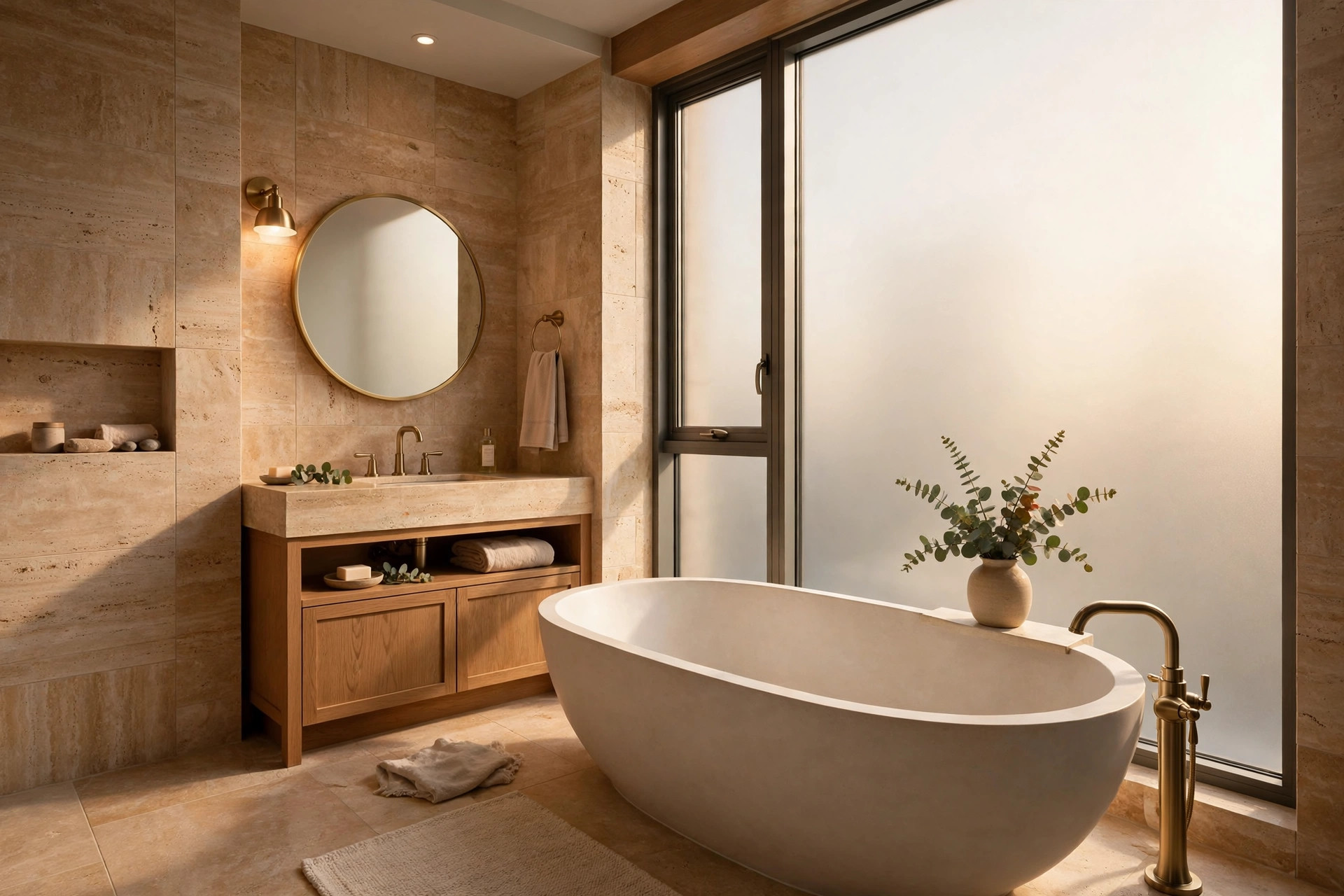
Turn the overhead light off and start over. If the bathroom has a window, that is your light source — even a small frosted window throws soft, even daylight across the room, and it is the most flattering light a bathroom will ever get. Shoot in the late morning, when the daylight is bright but not blasting directly through the glass, and let the window do the work. If the room has no window, bring a single soft light source: a small LED panel bounced off the ceiling, or even a bright lamp placed just outside the door, aimed in. The goal is diffused light that fills the room evenly, not a spotlight that carves it up.
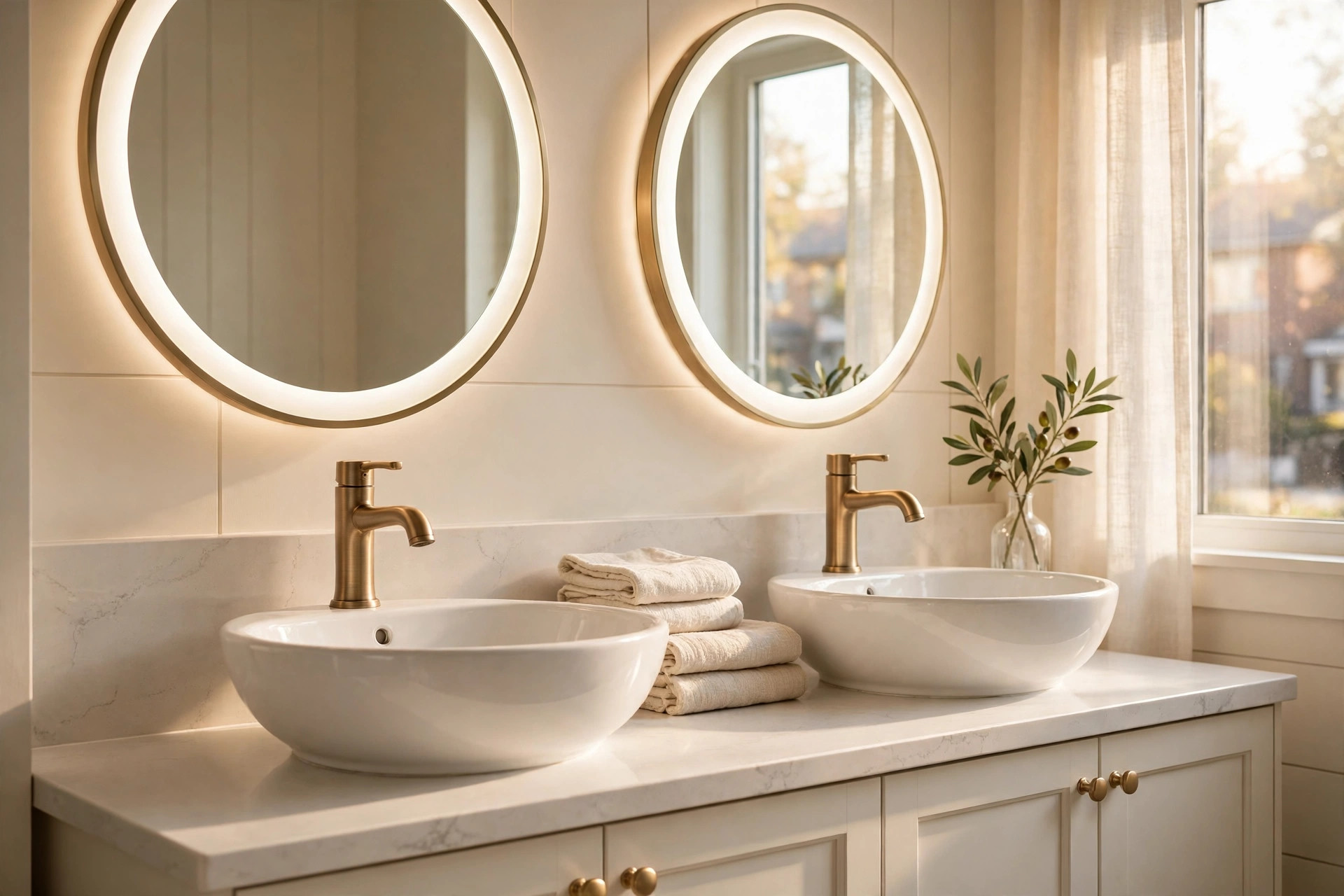
Then turn on the vanity lights — but only the warm ones. Backlit mirrors and wall sconces beside the mirror add a warm glow that makes the room feel inviting, and they photograph beautifully against the cooler daylight. The combination is what sells the spa feeling: cool, clean daylight from the window, warm light at the mirror. Keep the colour temperature consistent, though. Mixing a cold ceiling fluorescent with warm sconces makes the tiles look sickly, and no amount of editing fixes that honestly.
Shoot Wide, But Keep the Lines True
Bathrooms are tight, and the temptation is to reach for the widest lens you own and cram the whole room into one frame. Resist it. An ultra-wide shot of a bathroom does what ultra-wide shots always do: it bends the mirror, stretches the tub, and makes the vanity look like it belongs in a funhouse. Buyers notice, even if they cannot name what is wrong. The room feels fake, and a fake-feeling bathroom makes them distrust the rest of the listing.
Use a moderate wide angle — wide enough to show the tub, the vanity, and the shower in one honest frame, but not so wide that the verticals start to lean. Stand in the doorway or the far corner, hold the camera at chest height, and keep it level. The mirror should be a rectangle, not a trapezoid. The tile lines should run straight. If you cannot fit the whole room without distortion, do not force it: shoot two honest frames instead of one dishonest one. A clean shot of the tub and window, plus a clean shot of the vanity and mirror, tells the truth better than a single stretched panorama.
Watch the mirror. It is the one object in a bathroom that photographs the photographer, the doorway, and everything behind the camera. Before you shoot, check what the mirror is reflecting. Step out of frame, close the door behind you, and hide the clutter on the opposite wall. A mirror that reflects a bright window or a clean wall doubles the feeling of space. A mirror that reflects a photographer in a doorway kills the illusion instantly.
Stage the Vanity, Not the Whole Room
The vanity is the face of the bathroom, and it is where staging pays off fastest. But the mistake most people make is staging everything — every shelf, every ledge, every corner gets a candle, a plant, and a rolled towel, until the room looks like a spa display instead of a bathroom someone actually uses. Buyers can tell the difference, and an over-staged bathroom reads as a cover-up.
Stage the vanity and leave the rest alone. Clear the counter completely, then put back exactly three things: something useful, something soft, and something alive. A soap dispenser or a neatly folded hand towel is the useful thing. A small stack of linen towels or a woven tray is the soft thing. A sprig of eucalyptus in a glass bottle or a small potted plant is the living thing. Three objects, grouped tightly on one side of the counter, leave the rest of the surface empty — and empty counter space is what makes a bathroom feel generous.
Then clear everything else out of the shot. Toothbrushes, razors, prescription bottles, the half-used shampoo on the tub edge — all of it goes into a drawer for the shoot. The shower niche should hold at most two or three matching bottles, never a crowd of half-empty ones. The towel bar gets one clean towel, folded straight, in a colour that matches the room. The toilet lid stays down, always. These are small disciplines, but they are the difference between a bathroom that looks lived in and one that looks photographed.
The Details Buyers Zoom In On
Buyers zoom in on bathroom photos more than any other room in the listing, because the bathroom is where cheap finishes and sloppy workmanship cannot hide. They pinch-zoom on the faucet, the grout, the edge of the mirror, the caulk line where the tub meets the wall. A bathroom photo is an invitation to inspect, so make sure there is nothing to find.
Before the shoot, run a ten-minute detail pass. Wipe the mirror and the faucet until there are no water spots — the camera loves a water spot and will find every single one. Clean the grout lines, especially around the shower, where discolouration shows up as a dark smudge in the photo. Check the caulk: cracked or yellowed caulk around the tub photographs as neglect, and a fresh bead of white caulk costs a few dollars and twenty minutes. Polish the hardware. If the towel bar or the faucet handles are loose, tighten them — a crooked fixture in a close-up reads as a house that was not maintained.
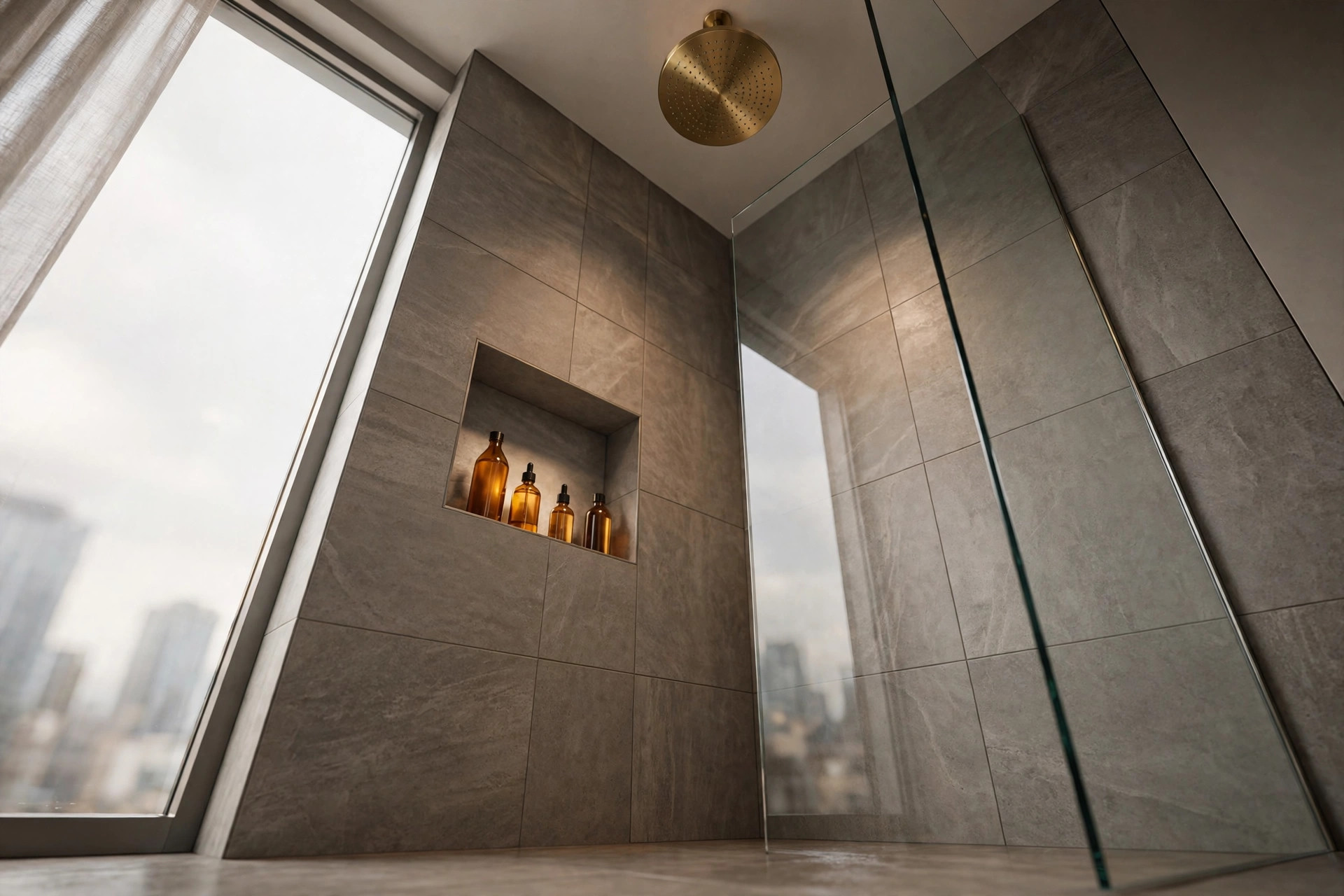
Then shoot the details on purpose. A close-up of the faucet and the vessel sink, a frame of the rain showerhead against the stone tile, the texture of the folded towels — these detail shots do real work in a listing. They tell the buyer the finishes are quality, they break up the wide shots in the photo gallery, and they give the listing a feeling of craft that a wide shot alone cannot deliver. One or two detail photos per bathroom is enough. More than that and the gallery starts to feel like a catalogue.
Powder Rooms Deserve the Same Care
The powder room is the most neglected photo in Toronto listings, and it is the easiest one to get right. It is small, it usually has no window, and most photographers shoot it in thirty seconds as an afterthought — door open, overhead light on, toilet front and centre. The result is a photo that makes a charming little room look like a closet with plumbing.
Give the powder room the same treatment as the ensuite. Turn off the overhead light and use the vanity sconces or a small soft light from the hallway. Shoot from the doorway at a slight angle, so the vanity and mirror lead the frame and the toilet sits quietly to one side instead of dead centre. A powder room with a bold paint colour or a patterned wallpaper photographs beautifully — the small space makes the colour feel intentional rather than overwhelming — so let the wall be the star and keep the staging minimal: one hand towel, one small plant, nothing on the counter.
And do not skip it. A listing with no powder room photo makes buyers wonder what is wrong with the powder room. Even a single good frame tells them the room exists, it is clean, and it was worth photographing. That is all it needs to do.
The Bathroom Photo Is the Upgrade Pitch
Here is what the bathroom photo is really doing in a Toronto listing: it is pitching the upgrade. A buyer looking at a renovated ensuite is not just seeing tile and brass — they are seeing the ten thousand dollars they will not have to spend, the contractor they will not have to hire, the months of living through a renovation they will not have to endure. A bathroom that photographs like a spa is a bathroom the buyer gets to keep, and that feeling is worth real money in an offer.
That is why the bathroom photos deserve the same care as the kitchen and the living room. Light the room like a spa, not a clinic. Keep the lines true. Stage the vanity with three objects and clear the rest. Fix the small details before the camera comes out, shoot one or two honest detail frames, and give the powder room its single good shot. None of this needs a renovation or expensive gear. It needs twenty minutes of discipline before the shoot — and the listing that comes out of it will book showings from buyers who already feel at home in the smallest room in the house.